
Product design
Timeling: Meetup dating
With user-centered approach, the goals was to create an intuitive interface for effortless financial management while incorporating gamification.


Industry
Industry
Product design
Consumer apps
Product design
Headquarters
Role
Headquarters
Headquarters
Consumer apps
Head of design
Consumer apps
Founded
Project length
Founded
6 Months
6 Months
Key skills
Key skills
Workshops, design systems (Figma), user testing, app architecture, user flows, wireframing
Description
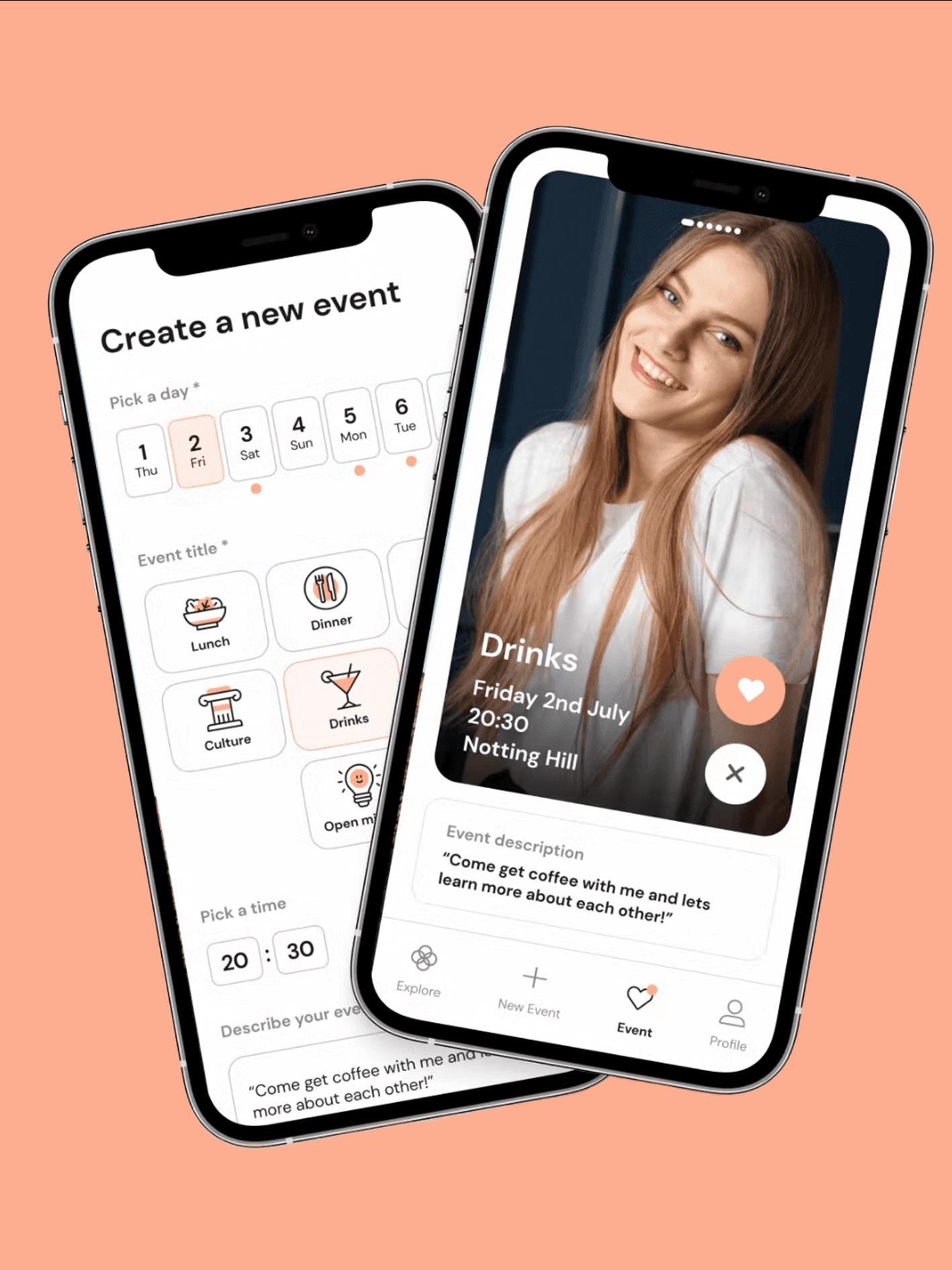
Timeling is a calendar-based social app enabling users to create meetups, explore activities, go on dates, and connect with new friends. Working within a ten-person team, the role as Head of Design focused on shaping the product by distilling insights from founders, stakeholders, and early customer groups. Since launch, the app has continued to grow and is now rolling out to its fifth country.
My Role
Joining the product more than a year into development, the existing designs lacked user-centric structure and consistency. The role centred on implementing UX best practices, establishing a clear design language, and creating a scalable framework for the design team.
To refocus the product around user needs, research was conducted through interviews with defined user groups, followed by usability testing on the existing designs to establish a baseline for success. The role also required managing delivery expectations with the founder and introducing an agile sprint format to bring clarity to planning and execution.
Best-practice processes for documentation, organisation, and delivery were implemented, improving collaboration with developers and streamlining stakeholder reviews.
Description
Timeling is a calendar-based social app enabling users to create meetups, explore activities, go on dates, and connect with new friends. Working within a ten-person team, the role as Head of Design focused on shaping the product by distilling insights from founders, stakeholders, and early customer groups. Since launch, the app has continued to grow and is now rolling out to its fifth country.
My Role
Joining the product more than a year into development, the existing designs lacked user-centric structure and consistency. The role centred on implementing UX best practices, establishing a clear design language, and creating a scalable framework for the design team.
To refocus the product around user needs, research was conducted through interviews with defined user groups, followed by usability testing on the existing designs to establish a baseline for success. The role also required managing delivery expectations with the founder and introducing an agile sprint format to bring clarity to planning and execution.
Best-practice processes for documentation, organisation, and delivery were implemented, improving collaboration with developers and streamlining stakeholder reviews.
Description
Timeling is a calendar-based social app enabling users to create meetups, explore activities, go on dates, and connect with new friends. Working within a ten-person team, the role as Head of Design focused on shaping the product by distilling insights from founders, stakeholders, and early customer groups. Since launch, the app has continued to grow and is now rolling out to its fifth country.
My Role
Joining the product more than a year into development, the existing designs lacked user-centric structure and consistency. The role centred on implementing UX best practices, establishing a clear design language, and creating a scalable framework for the design team.
To refocus the product around user needs, research was conducted through interviews with defined user groups, followed by usability testing on the existing designs to establish a baseline for success. The role also required managing delivery expectations with the founder and introducing an agile sprint format to bring clarity to planning and execution.
Best-practice processes for documentation, organisation, and delivery were implemented, improving collaboration with developers and streamlining stakeholder reviews.


From concept to market - Design thinking
Workshops
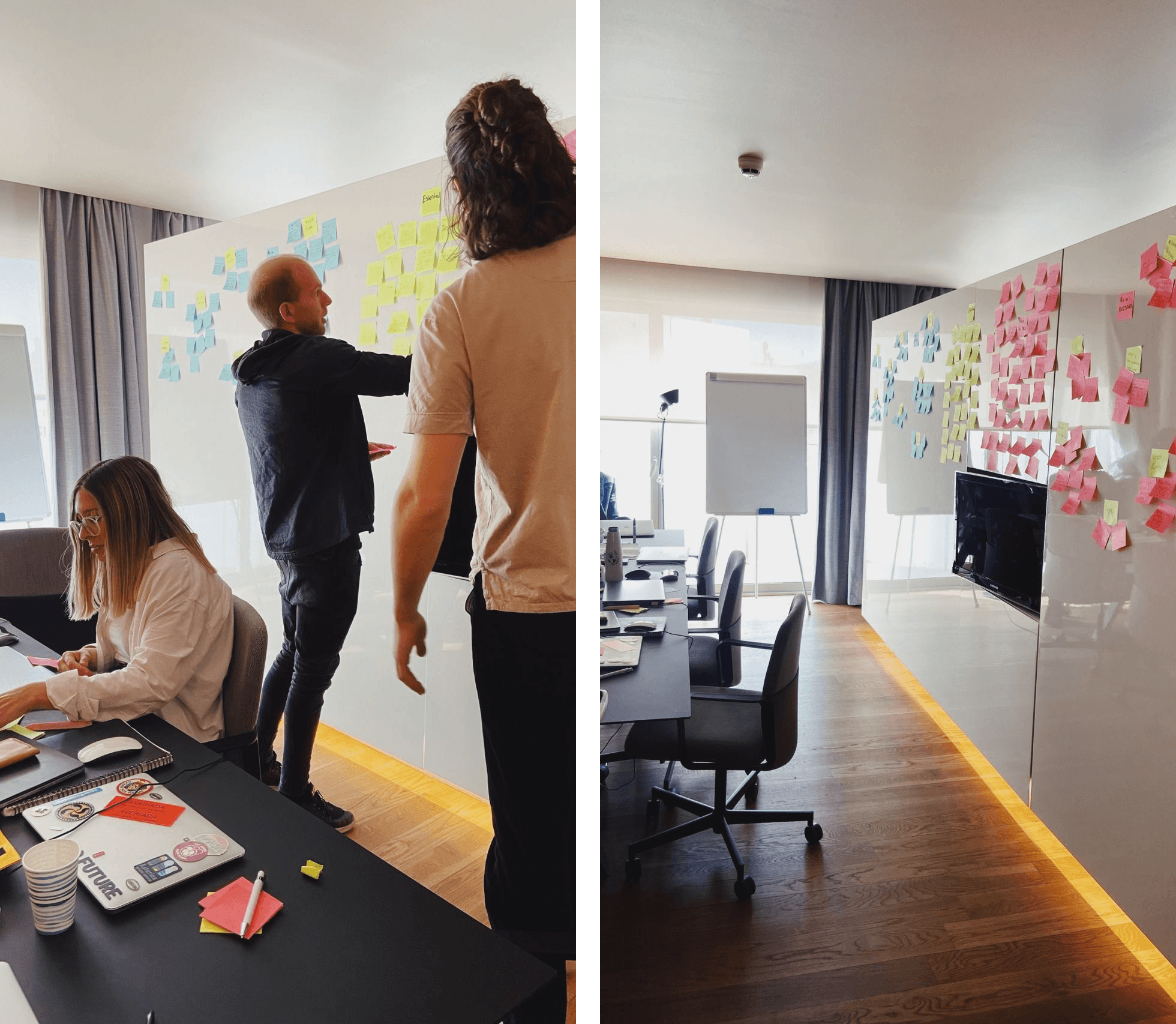
Full-team workshops were run to shape and refine key features of the app, supported by insights from industry specialists. All outputs were consolidated and returned to the team with clear next steps and validation plans.
Design Process
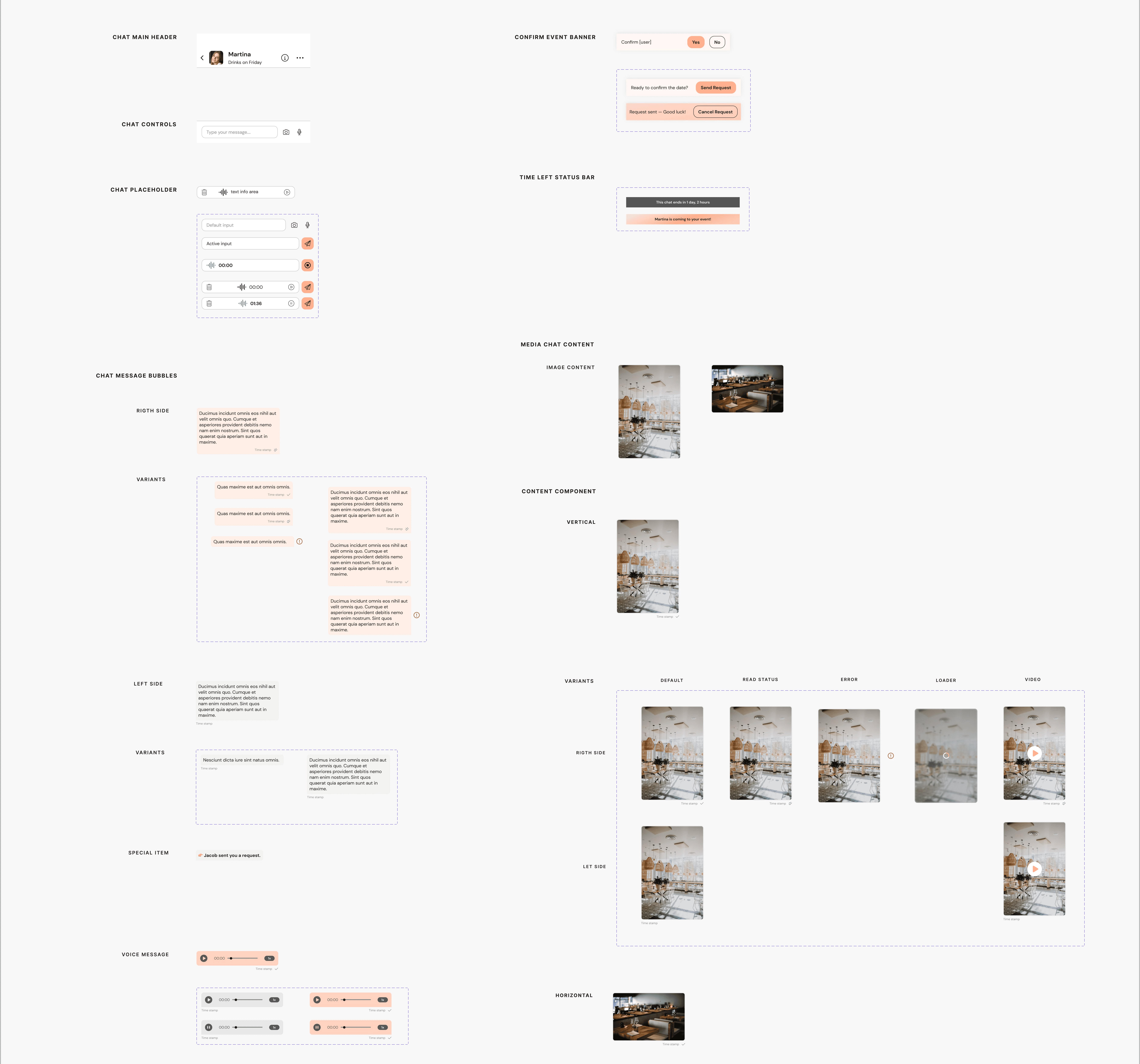
A formal design system was introduced alongside structured documentation methods, transforming how the team operated. The system created a unified visual and interaction language, while detailed documentation and Jira tracking improved handovers and design change management.
End-to-End Experience Mapping
Comprehensive journey and flow mapping revealed gaps across the experience and provided a living source of truth for the team. These maps were continuously updated as the product evolved, informing interface decisions and ensuring coherence.
User Testing
Four rounds of testing, conducted at key stages before and after launch, provided the data needed to iterate the product effectively. Post-launch reviews with organic users uncovered experience gaps and surfaced feature requests that shaped the product roadmap.
Final Designs
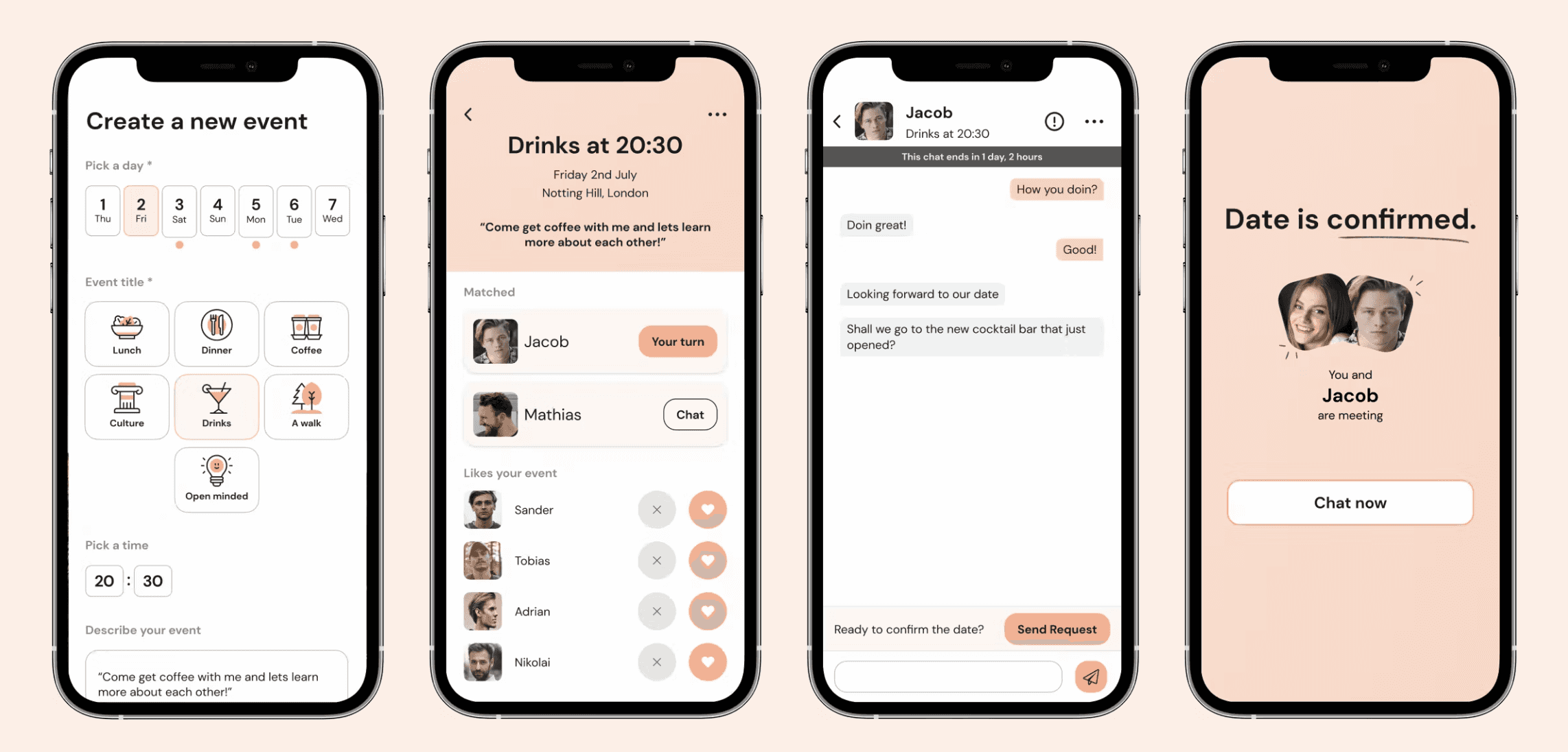
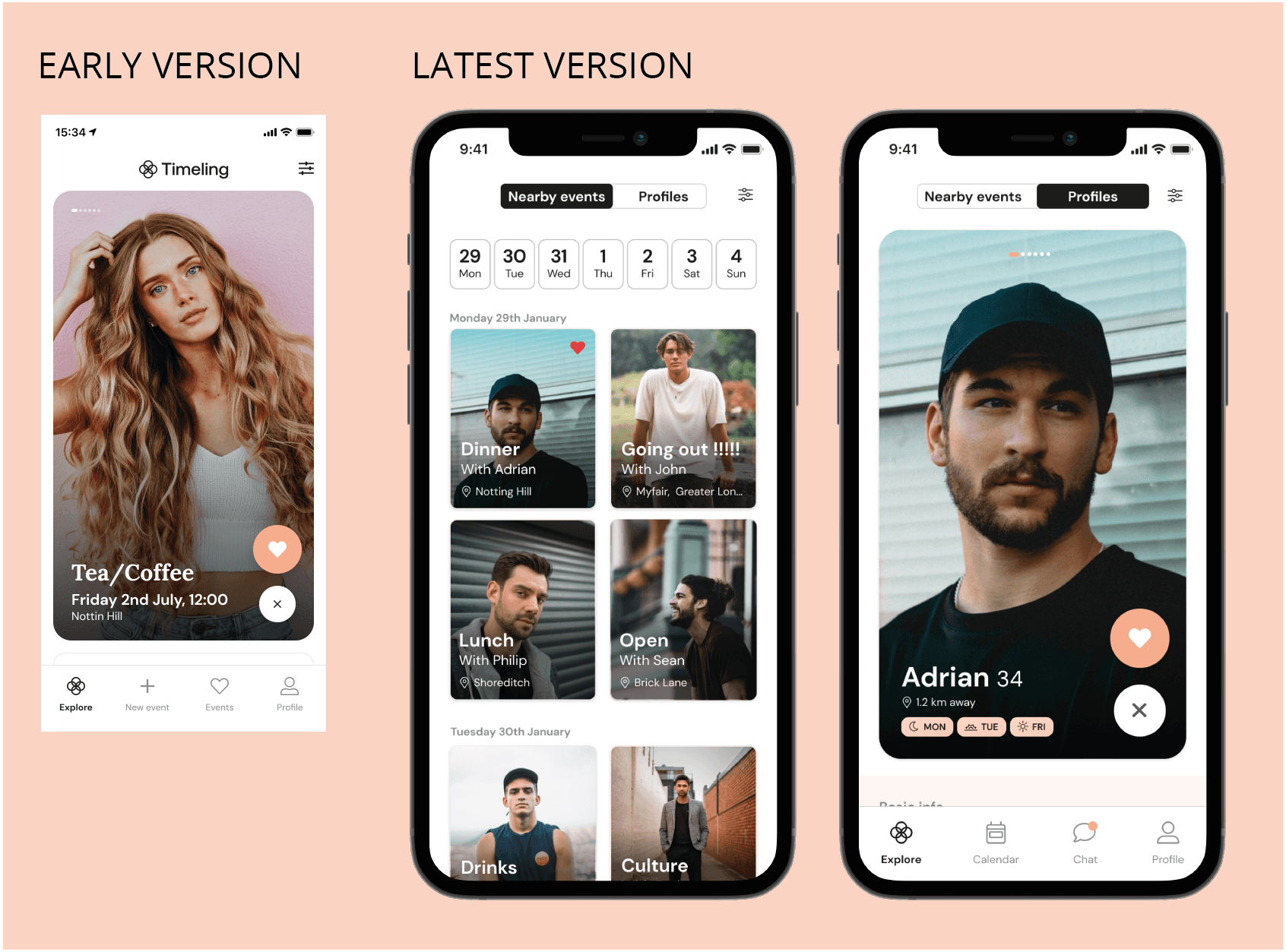
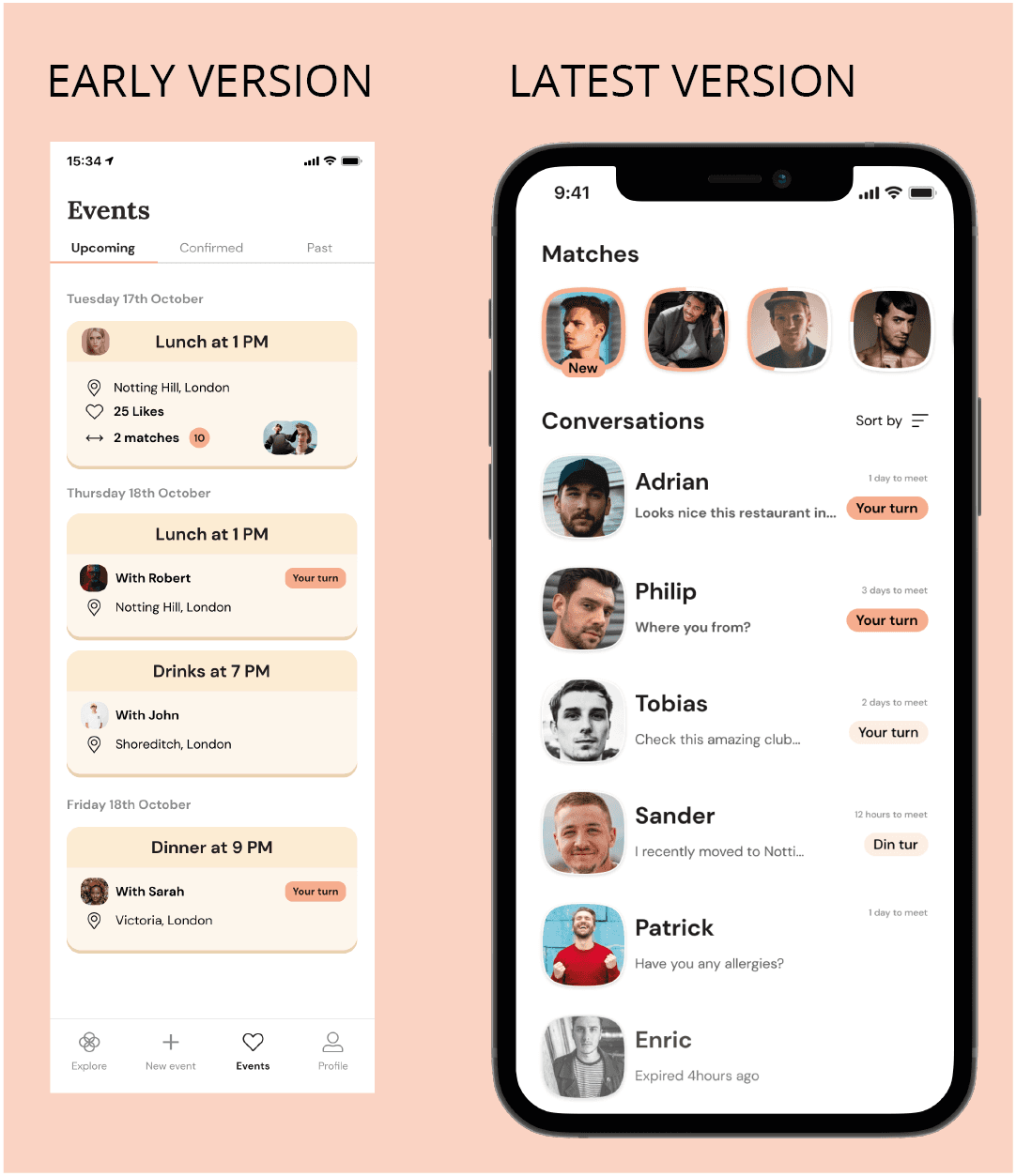
Following launch, a major redesign was required due to low traffic through the main feature. A new approach ensured user profiles remained consistently visible rather than disappearing as events expired. These designs represented the final released work completed on the project. Additional unreleased features were also designed but remain confidential.
From concept to market - Design thinking
Workshops
Full-team workshops were run to shape and refine key features of the app, supported by insights from industry specialists. All outputs were consolidated and returned to the team with clear next steps and validation plans.
Design Process
A formal design system was introduced alongside structured documentation methods, transforming how the team operated. The system created a unified visual and interaction language, while detailed documentation and Jira tracking improved handovers and design change management.
End-to-End Experience Mapping
Comprehensive journey and flow mapping revealed gaps across the experience and provided a living source of truth for the team. These maps were continuously updated as the product evolved, informing interface decisions and ensuring coherence.
User Testing
Four rounds of testing, conducted at key stages before and after launch, provided the data needed to iterate the product effectively. Post-launch reviews with organic users uncovered experience gaps and surfaced feature requests that shaped the product roadmap.
Final Designs
Following launch, a major redesign was required due to low traffic through the main feature. A new approach ensured user profiles remained consistently visible rather than disappearing as events expired. These designs represented the final released work completed on the project. Additional unreleased features were also designed but remain confidential.


