
Product design
Pulse 360:Employee Engagement
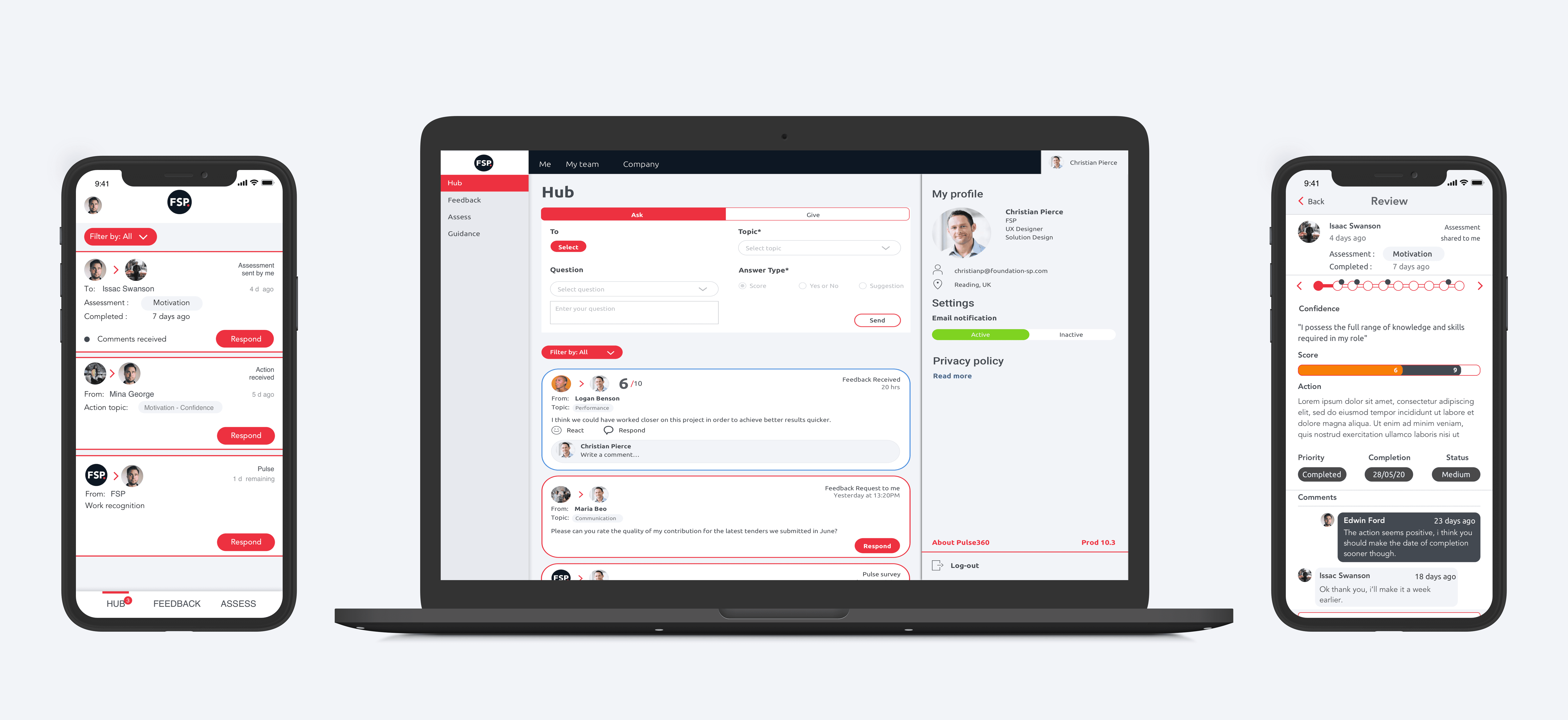
A web and mobile platform designed to improve employee performance and engagement through self-assessment, real-time feedback, and people analytics that provide organisations with meaningful insights into teams and individuals.


Industry
Industry
Product design
SaaS - HR tech
Product design
Headquarters
Role
Headquarters
Headquarters
SaaS - HR tech
Lead product designer
SaaS - HR tech
Founded
Project length
Founded
24 months
24 months
Key skills
Key skills
Wireframing, prototyping, product management, user interviews, data visualisation, user testing
My Role
Lead designer responsible for the end-to-end user experience, from concept ideation to user testing and governance of the final developed product. Key responsibilities included:
Conducting interviews and surveys to understand user behaviours across all organisational levels, from CEOs to account managers.
Designing prototypes to optimise the user experience and establishing an iterative, agile design process through continuous testing.
Collaborating closely with a multidisciplinary team and presenting design progress and research insights on a weekly basis.
UX Process
Identify
A detailed Product and UX roadmap was maintained and used in every sprint planning session.
The roadmap was driven by user needs gathered through previous interviews and testing, alongside stakeholder requirements and technical considerations.
Research
Surveys and moderated interviews were created and conducted with key “Super Users” who represented core personas.
Findings were analysed and presented back to the team to inform ongoing product decisions.
Ideate
Workshops with cross-functional teams were facilitated to map user flows and gather structural concepts.
Sketches and wireframes were refined to ensure full clarity of the user journey, forming the basis of user stories for all key functionality.
Design
High-fidelity mockups and clickable prototypes were produced and tested with a minimum of six users.
Designs were handed over to developers with clear explanations of features to support estimation and implementation.
My Role
Lead designer responsible for the end-to-end user experience, from concept ideation to user testing and governance of the final developed product. Key responsibilities included:
Conducting interviews and surveys to understand user behaviours across all organisational levels, from CEOs to account managers.
Designing prototypes to optimise the user experience and establishing an iterative, agile design process through continuous testing.
Collaborating closely with a multidisciplinary team and presenting design progress and research insights on a weekly basis.
UX Process
Identify
A detailed Product and UX roadmap was maintained and used in every sprint planning session.
The roadmap was driven by user needs gathered through previous interviews and testing, alongside stakeholder requirements and technical considerations.
Research
Surveys and moderated interviews were created and conducted with key “Super Users” who represented core personas.
Findings were analysed and presented back to the team to inform ongoing product decisions.
Ideate
Workshops with cross-functional teams were facilitated to map user flows and gather structural concepts.
Sketches and wireframes were refined to ensure full clarity of the user journey, forming the basis of user stories for all key functionality.
Design
High-fidelity mockups and clickable prototypes were produced and tested with a minimum of six users.
Designs were handed over to developers with clear explanations of features to support estimation and implementation.
My Role
Lead designer responsible for the end-to-end user experience, from concept ideation to user testing and governance of the final developed product. Key responsibilities included:
Conducting interviews and surveys to understand user behaviours across all organisational levels, from CEOs to account managers.
Designing prototypes to optimise the user experience and establishing an iterative, agile design process through continuous testing.
Collaborating closely with a multidisciplinary team and presenting design progress and research insights on a weekly basis.
UX Process
Identify
A detailed Product and UX roadmap was maintained and used in every sprint planning session.
The roadmap was driven by user needs gathered through previous interviews and testing, alongside stakeholder requirements and technical considerations.
Research
Surveys and moderated interviews were created and conducted with key “Super Users” who represented core personas.
Findings were analysed and presented back to the team to inform ongoing product decisions.
Ideate
Workshops with cross-functional teams were facilitated to map user flows and gather structural concepts.
Sketches and wireframes were refined to ensure full clarity of the user journey, forming the basis of user stories for all key functionality.
Design
High-fidelity mockups and clickable prototypes were produced and tested with a minimum of six users.
Designs were handed over to developers with clear explanations of features to support estimation and implementation.


Featured Projects
Me Insights
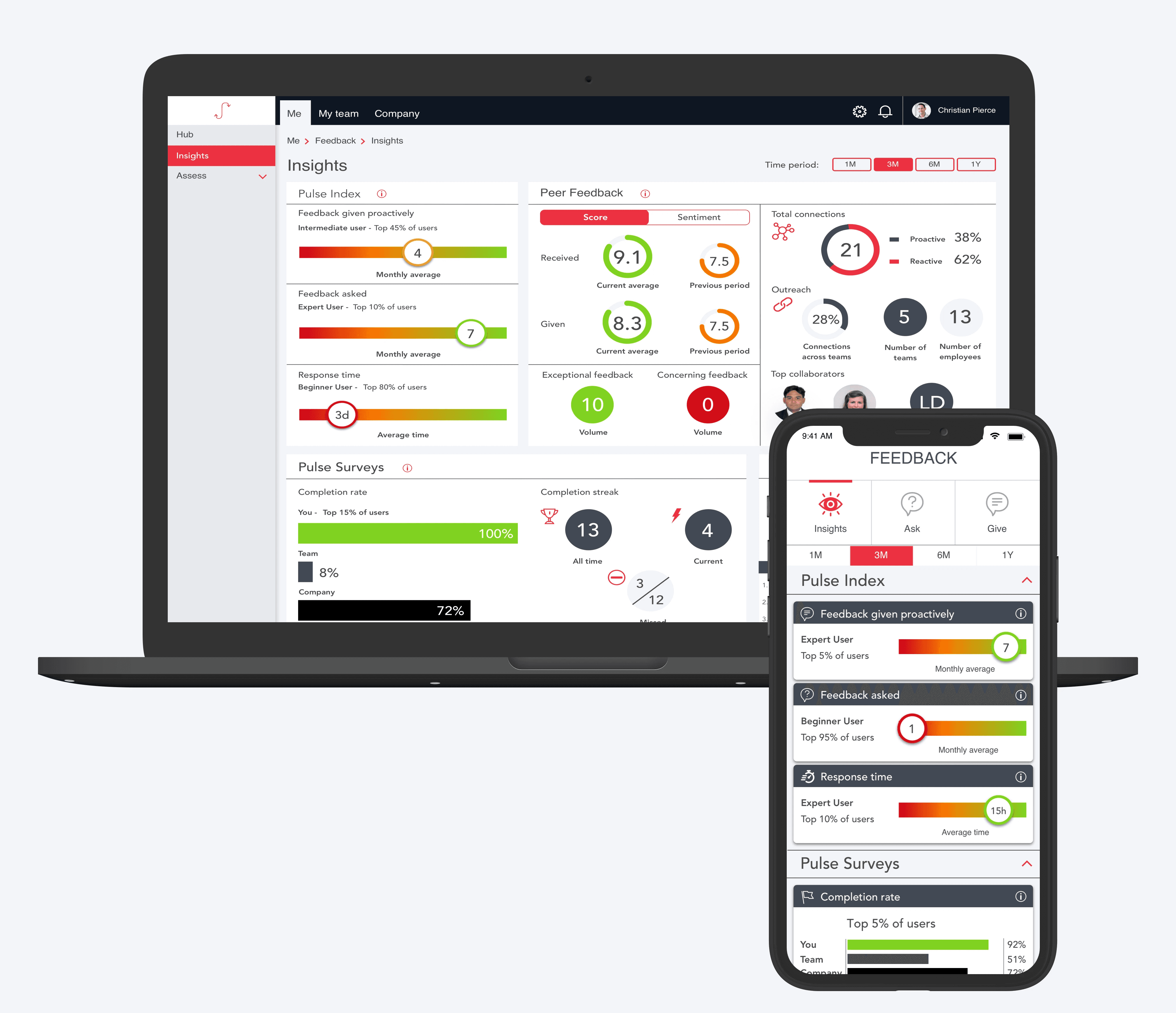
This feature helps drive user engagement by giving individuals visibility into their activity and performance. It covers three areas: organisation feedback, peer-to-peer feedback, and responses to surveys. Gamification was introduced to increase usage and foster positive behavioural patterns.
Identifying User Needs
Low engagement stemmed from employees not understanding the personal value of providing feedback, despite its importance to management. Research focused on uncovering what users wanted to see to make the feature meaningful.
Problem
Engagement in the feedback area was low, and communication between management and employees was limited. Users saw little benefit for themselves, resulting in minimal organic activity.
Solution
Insights revealed that users wanted to understand how their engagement compared to others. Introducing gamified elements addressed this need and increased activity by 300%.
Feedback Insights
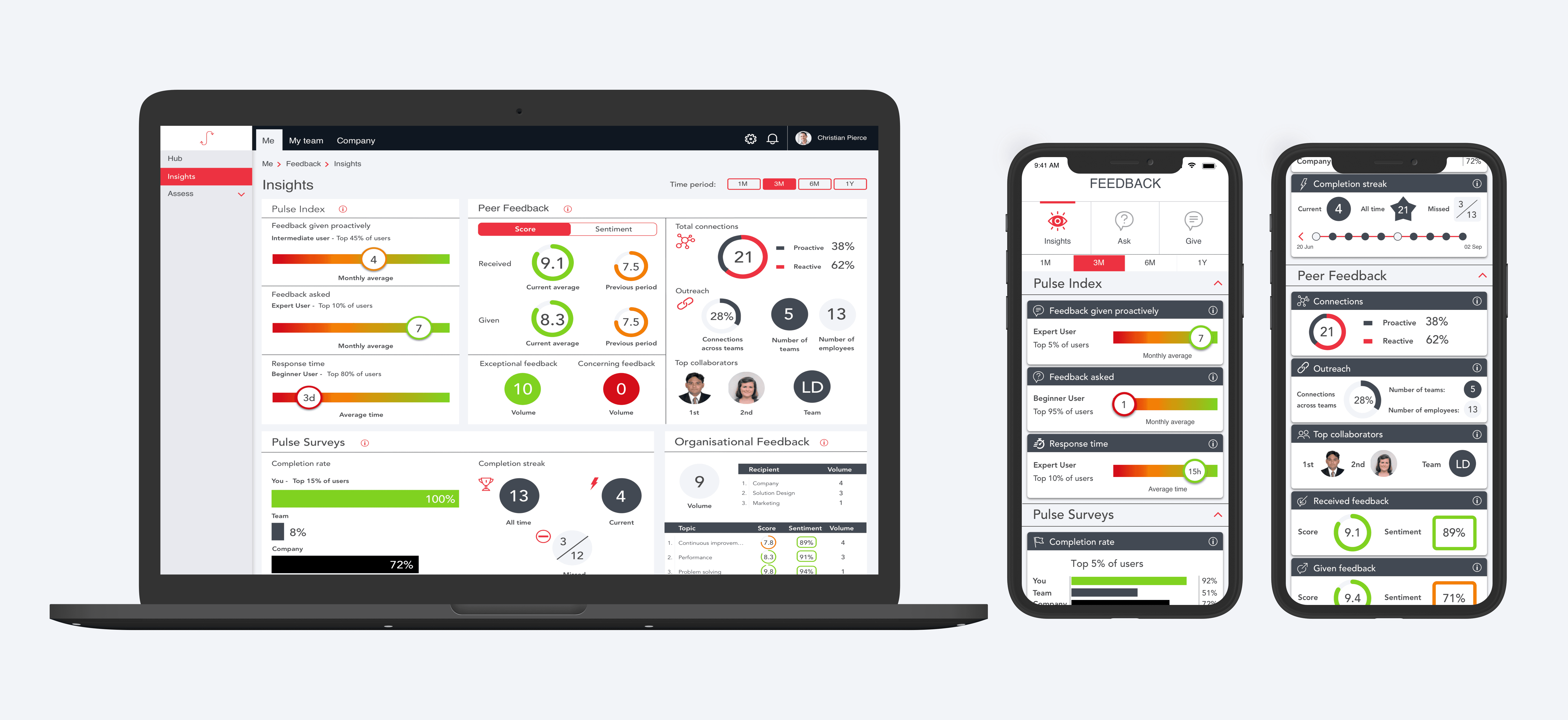
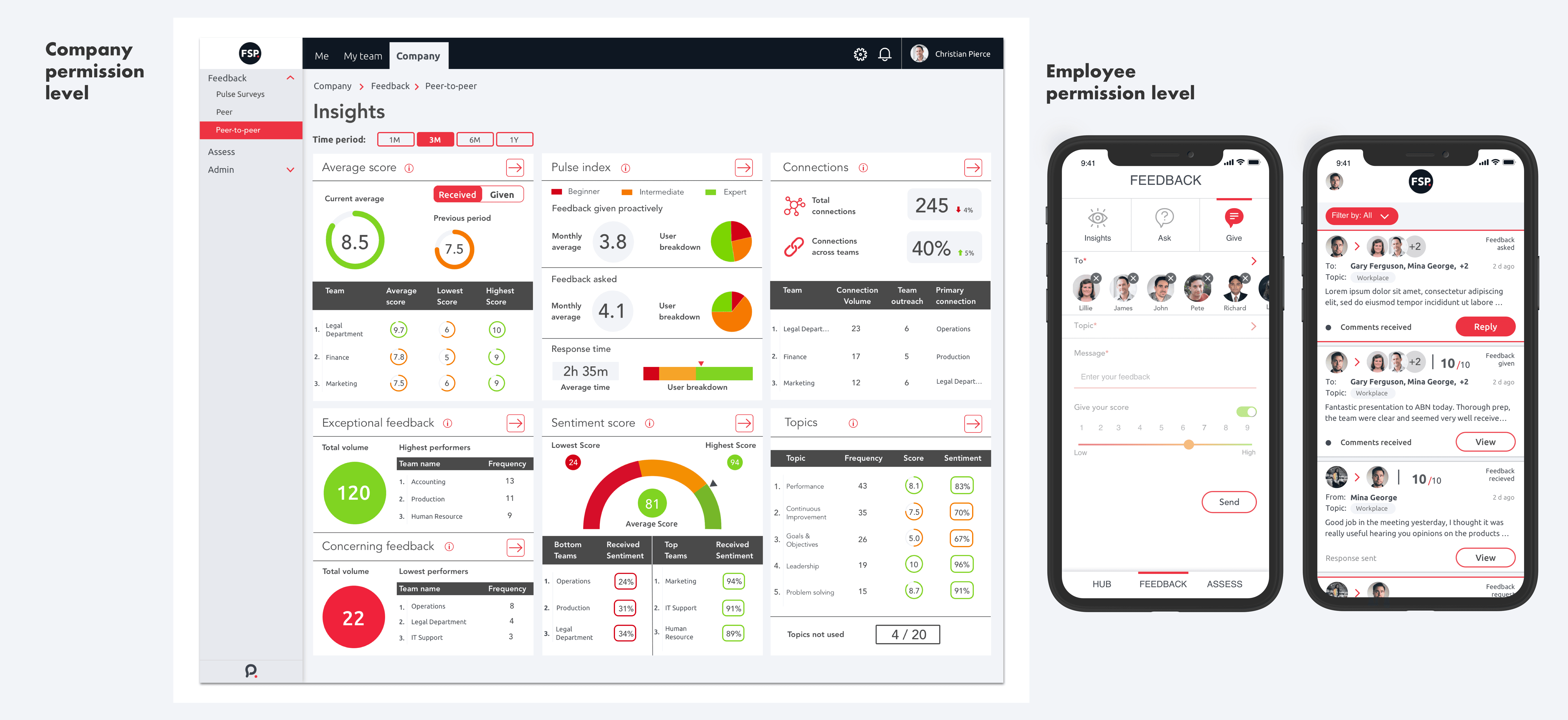
Designed to give leadership a clear overview of employee sentiment and engagement, this feature presents six modular widgets, each with an associated deep-dive view. The structure supports future scalability with additional widgets and rearrangement based on organisational needs.
Assessment (Mobile & Web)
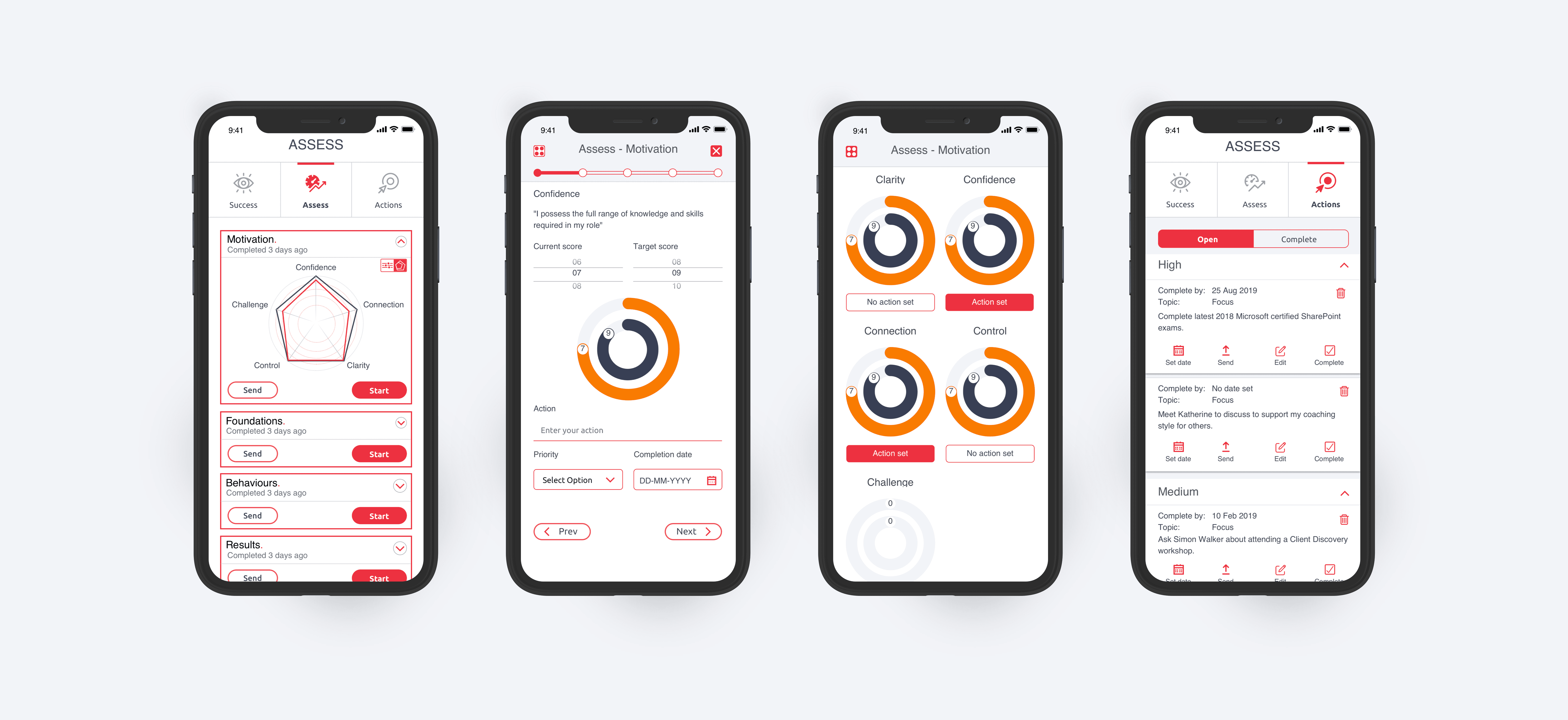
A redesigned employee-led performance assessment replaced outdated appraisal processes. Pulse360 enabled more proactive, meaningful performance discussions by focusing on key measures and actions. User testing of previous designs informed streamlined, more engaging flows across mobile and web.
Featured Projects
Me Insights
This feature helps drive user engagement by giving individuals visibility into their activity and performance. It covers three areas: organisation feedback, peer-to-peer feedback, and responses to surveys. Gamification was introduced to increase usage and foster positive behavioural patterns.
Identifying User Needs
Low engagement stemmed from employees not understanding the personal value of providing feedback, despite its importance to management. Research focused on uncovering what users wanted to see to make the feature meaningful.
Problem
Engagement in the feedback area was low, and communication between management and employees was limited. Users saw little benefit for themselves, resulting in minimal organic activity.
Solution
Insights revealed that users wanted to understand how their engagement compared to others. Introducing gamified elements addressed this need and increased activity by 300%.
Feedback Insights
Designed to give leadership a clear overview of employee sentiment and engagement, this feature presents six modular widgets, each with an associated deep-dive view. The structure supports future scalability with additional widgets and rearrangement based on organisational needs.
Assessment (Mobile & Web)
A redesigned employee-led performance assessment replaced outdated appraisal processes. Pulse360 enabled more proactive, meaningful performance discussions by focusing on key measures and actions. User testing of previous designs informed streamlined, more engaging flows across mobile and web.


